Coaching in Australia has no licence, no registration and no minimum training standard. Anyone can call themselves a life coach, and plenty do after a weekend workshop. That is precisely why the training you choose matters more in coaching than in almost any other helping profession. It is the only thing that separates you from everyone else using the same title. Holistic coaching adds a further layer, because it asks more of the practitioner than a set of questioning frameworks.
What is holistic coaching?
Conventional life coaching works on goals and actions. It is future focused, structured and largely cognitive: where are you now, where do you want to be, what will you do this week.
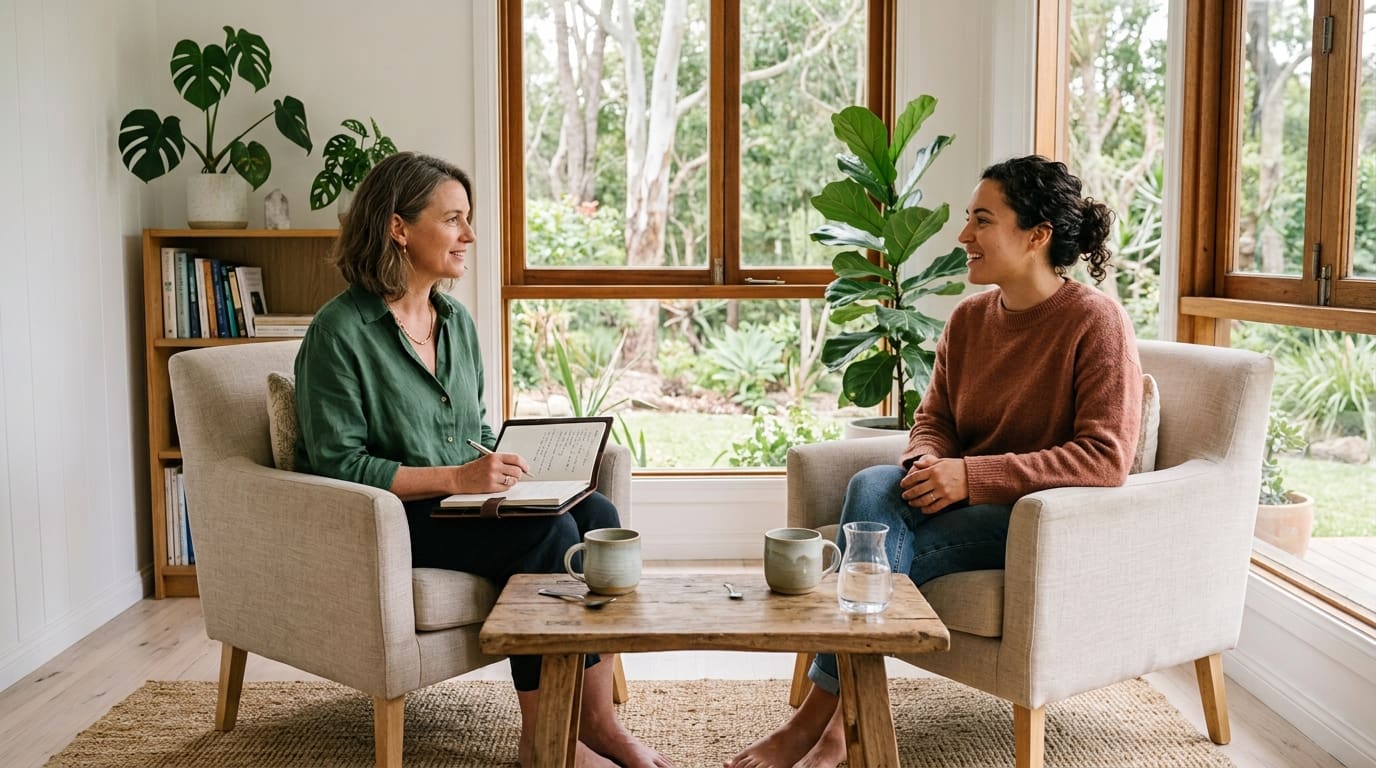
Holistic coaching keeps that forward momentum but works with the whole person. It treats mental, emotional, physical and spiritual wellbeing as connected, and it assumes that the thing stopping a client is rarely the lack of a plan. More often it is a nervous system stuck in stress, a belief formed years ago, or a life built around someone else’s values. So alongside coaching method, a holistic coach works with nervous system regulation, mindset and limiting beliefs, somatic awareness and values alignment, and in the empowerment coaching model, intuitive and soul led guidance.
The aim is not to fix the client. It is to help them come back to their own clarity and strength so that the change they make actually holds.
A holistic coach works with the whole person, not just their goals. That is why the training runs deeper than a conventional coaching certificate.
Is coaching regulated in Australia?
No. There is no government registration for life coaches, holistic coaches or empowerment coaches, and no legal requirement to hold any training at all. Professional standards come from industry bodies instead. In the holistic space that is the International Institute for Complementary Therapists (IICT), which accredits training providers and gives graduates of approved programs access to practitioner membership and insurance.
For you, this means two things. Nobody can stop you calling yourself a holistic coach tomorrow. But without accredited training you cannot obtain professional indemnity insurance, cannot join an accrediting body, and cannot answer the first question a discerning client asks. Accreditation is not the legal gate. It is the commercial one.
The training pathway, step by step
1. Foundation training in meditation and nervous system regulation
Credible holistic coaching pathways usually begin with meditation and mindfulness rather than coaching theory. Before you can help a client regulate, you need to be able to regulate yourself, and you need lived experience of the practices you will draw on in session. The Certificate in Meditation Teaching is the foundation course at The Australian Holistic Academy, and completing it opens the lower cost postgraduate pathway into the coaching program.
2. Coaching skills and holistic method
From there the training moves into the coaching work itself: empowerment based coaching frameworks, mindset work and limiting belief transformation, nervous system informed coaching, values based alignment and visioning, goal setting from a sustainable place, and trauma aware foundations. The Master Practitioner of Holistic Empowerment Coaching covers all of this and adds intuition development and soul guidance practices, which is the piece that distinguishes empowerment coaching from a generic coaching certificate.
3. Practice, feedback and integration
Theory does not make a coach. Look for a program with live components alongside the self paced study, such as monthly masterclasses you can attend or watch back, and a student community where you can practise. The programs worth doing also teach integration tools for long term client growth, because a coach whose clients slide back the week after a session does not keep clients.
4. Insurance and professional membership
Once you graduate from an accredited program you can apply for practitioner insurance and register with your accrediting body. Do both before your first paid client. Insurance is what makes a booking possible, and membership is what a careful client looks for.
How long it takes
A master practitioner level program runs about 12 months full time at roughly 20 study hours a week, or 24 months part time at roughly 10 hours a week, which is how most people do it around work and family. Study is online and self paced within those windows, with the live masterclasses and student community running alongside.
What it costs
Holistic coaching at master practitioner level is a professional training investment rather than a short course fee, with monthly and weekly payment plans generally available and a lower postgraduate fee for those who already hold the foundation certificate. Current fees for both pathways are set out on the holistic coaching course page.
Compare what the fee covers. A cheaper coaching certificate usually means a shorter program with no live component, no nervous system or trauma aware content and no accreditation, which leaves you uninsurable and, in a crowded market, indistinguishable.
Where holistic coaches work
Almost all holistic coaches run their own practice, and the work is location independent, which is one of its main attractions. Most work one to one, online or in person, and many add group programs, workshops or retreats as they grow. A large share of graduates are existing practitioners in yoga, reiki, meditation teaching or counselling who add coaching so they can serve the client who is ready to move forward, not only the one who needs to be heard.
Is it the right path for you?
Holistic coaching suits people who have done their own inner work and want to guide others through theirs, existing practitioners who keep meeting clients who need momentum rather than support, and career changers drawn to work that is flexible, meaningful and their own. No previous coaching experience is needed.
It suits you less well if you want a defined role inside an organisation, or if you are after the quickest credential. And if what draws you is sitting with people through difficulty rather than moving them toward a goal, the Master Practitioner of Holistic Counselling may be the better fit. The two programs share the same foundation, so the choice can be made after the first step rather than before it.
If you want to see how a full program is put together, the Master Practitioner of Holistic Empowerment Coaching page sets out what you will learn, the study options and the certifications you graduate with, and the accreditation page explains what IICT recognition means in practice.